


President Donald Trump ordered federal contractors and subcontractors November 20 to notify the White House about congressional requests concerning their executive-branch work and coordinate responses with the administration. The executive order also requires them to follow instructions to withhold communications the White House or contracting agency determines are protected by executive privilege.
What happened
The requirements apply immediately to pending and future requests. Contractors must notify both the White House and their contracting agencies. Agencies are directed to coordinate responses and assertions of privilege, while contractors are responsible for ensuring their subcontractors comply.
Noncompliance can threaten a company’s federal business. The order directs agencies to consider appropriate enforcement, consistent with applicable law, including termination or cancellation of contracts and possible suspension or debarment. It does not make every violation an automatic cancellation.
The Office of Management and Budget must develop implementation guidance, and agencies must promptly inform contractors of their obligations. The order says implementation must comply with existing law and available appropriations.
In its fact sheet, the White House argued that the requirements protect confidential information and make contracting more efficient. It said uncoordinated responses could produce duplicative legal strategies and waste taxpayer resources. The administration also argued that agencies might hesitate to share sensitive material with contractors if confidentiality could not be assured.
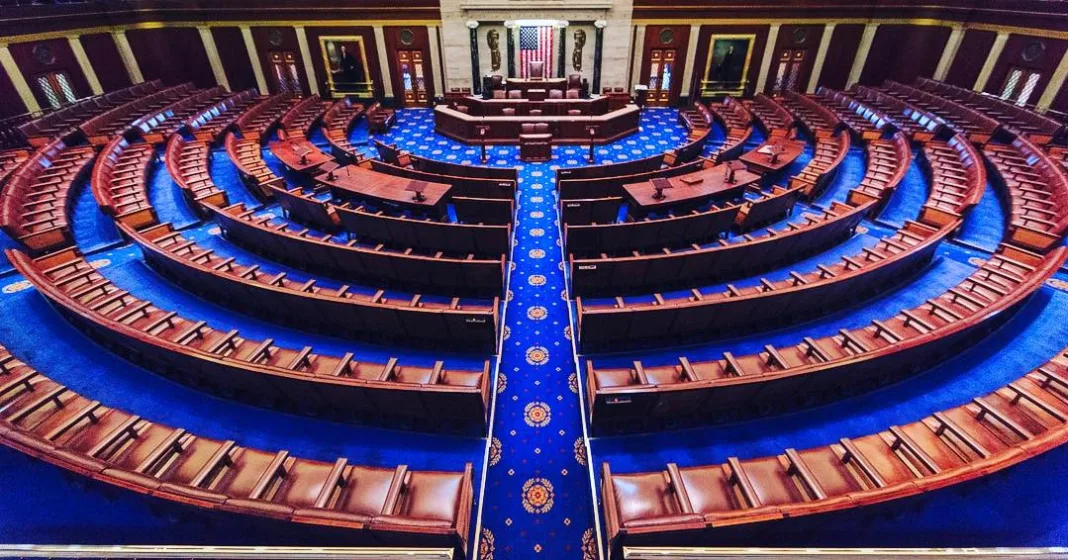
The timing places the directive in a coming oversight fight. Democrats will take control of Congress in January and have discussed investigations into government contracts and administration projects. CNN reported that prospective inquiries include the White House ballroom, Homeland Security contracting and the planned border wall in Big Bend National Park.
The Texas connection is one part of that broader contracting dispute. CNN described Democrats’ scrutiny of DHS purchases, deportation-related contracts and border-wall construction. The new order reaches federal contractors generally, rather than applying only to border work or to companies involved in one investigation.
How outlets covered it
CNN led with coordination requirements ahead of Democratic investigations. Its report gave space to the projects and contracts lawmakers want to examine. It also connected the order to White House counsel Will Scharf’s earlier instruction that agencies obtain approval before personnel testify to Congress, and his dispute with minority-party lawmakers over document demands.
Fox News emphasized the notification requirement and contractors’ risk of losing federal work. It presented Trump’s argument that lawmakers were seeking confidential executive information, while also explaining that the order could invite legal challenges. The article described Democrats’ planned investigations and quoted their stated legislative purpose, including Rep. Robert Garcia’s argument that oversight would inform legislation.
The Associated Press framed the directive as another restriction on responses to Congress. Its report emphasized the approaching change in congressional control and explained that executive privilege has limits and can lead to prolonged legal disputes.
CNN focused most on the investigations at stake, Fox on contractor obligations and the competing political positions, and AP on the wider oversight confrontation. All three described a new procedural barrier between congressional requests and company responses.
What’s disputed
The administration says the order protects executive confidentiality and prevents inefficient, uncoordinated disclosures. Lawmakers seeking records say their investigations can support legislation. The conflict turns on whether particular information is privileged and how that claim applies to a specific congressional request.
Fox reported that disputes could become especially acute when contractors are instructed to withhold subpoenaed records. The White House’s determination of privilege expresses the executive branch’s position; it does not resolve every possible conflict with Congress or the courts. AP noted that the protection is not absolute.
Opinion: The Civic Bearing’s Take
This section is opinion and reflects The Civic Bearing’s conservative perspective.
Protecting legitimate executive confidentiality is compatible with serious congressional oversight. Contractors should know when they are handling sensitive government communications and should have a clear process for raising privilege concerns. A coordinated response can be sensible without making every request a partisan confrontation.
The test will be whether the administration distinguishes genuinely protected deliberations from ordinary questions about spending and performance. Conservatives should insist on that distinction. Taxpayer-funded contracts deserve scrutiny, and a contractor’s interest in keeping government business should not become a reason to conceal waste. Congress, in turn, should identify the legislative purpose of its requests and pursue evidence rather than publicity.
How this article was produced
This article was generated using AI from the sources linked below. It does not include firsthand reporting or interviews. Our editors monitor published articles and correct errors promptly. Claims attributed to outside sources have not been independently verified by this publication.
Found an error? Email corrections@thecivicbearing.com.
Sources
- White House — Protecting the Executive’s Privileges and Enhancing Efficiencies in Federal Contracting (November 20, 2026)
- White House — Fact sheet on executive privileges and federal contracting (November 20, 2026)
- CNN — Trump directs federal contractors to coordinate with White House on congressional requests for information (November 21, 2026)
- Fox News — Trump orders federal contractors to alert White House to congressional record requests (November 21, 2026)
- The Associated Press — Trump orders federal contractors to check with White House before responding to Congress (November 21, 2026)