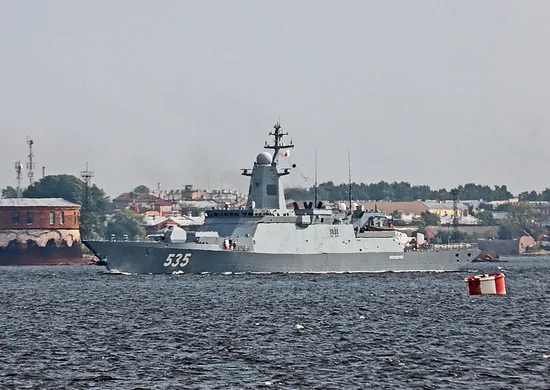



Ukrainian President Volodymyr Zelenskyy said Monday that Ukrainian naval drones sank the Russian corvette Merkury at Benghazi, Libya, in an operation the previous day. He also reported a strike on the cargo ship MV Angara, extending Kyiv’s campaign against Russian military shipping into the Mediterranean, according to Reuters.
What happened
Zelenskyy said seven Ukrainian-made naval drones took part and that a Ka-27 helicopter aboard the corvette was destroyed. The Merkury entered service in 2023. His public statement and accompanying attack videos identified the Angara as a vessel Russia used to move weapons.
The attack happened Sunday, November 22; Zelenskyy publicly acknowledged responsibility Monday, November 23. Reuters reported that eastern Libya’s administration said the corvette had stopped at Benghazi’s naval base to take on fuel and supplies while returning to Russia under a cooperation agreement.
Ukraine’s Security Service, known as the SBU, said it conducted the operation with the Ukrainian military. It described the vessels as military targets and said the drones were transported to a designated location before being launched from a mother ship. ABC News reported that the released footage showed strikes on both the corvette and a cargo ship at sea.
Benghazi is the seat of Libya’s eastern Government of National Stability, a rival of the internationally recognized administration in Tripoli. ABC reported that eastern authorities opened a joint investigation with Russia into the attack and its origin. The competing administrations make the location politically significant beyond the damage to the ships.
How outlets covered it
Reuters led with Zelenskyy’s account of the corvette’s sinking and connected it to a separate recent attack on Russian-linked shipping in the Gulf of Finland. Its short dispatch also included the eastern Libyan government’s explanation for why the Merkury was in port and noted the absence of an immediate Russian Defense Ministry response.
Associated Press emphasized the operation’s distance from the Ukrainian front: about 2,400 kilometers, or 1,500 miles. Its report added accounts from Libyan officials that at least four drones were intercepted and two struck the corvette. One official reported at least 10 wounded, including Russians and Libyans. AP also quoted Kremlin spokesman Dmitry Peskov declining comment and referring questions about further information to Russia’s Defense Ministry.
ABC News foregrounded Zelenskyy’s acknowledgment and the Ukrainian videos. It devoted more space to the SBU’s description of the launch method, Ukraine’s argument that the vessels were military targets, and the relationship between the eastern Libyan government and Russia.
Meduza placed the strike in Libya’s divided political setting. Its account highlighted eastern Prime Minister Osama Hammad’s objections, requests for explanations and concerns about where the drones originated. It also discussed the attack alongside other Ukrainian strikes on Russian shipping.
The principal difference was emphasis: Ukraine’s operational account led Reuters and ABC, AP added local accounts of the attack and injuries, and Meduza gave greater prominence to Libya’s sovereignty dispute.
What’s disputed
The launch location remains a central question. Meduza reported that eastern authorities wanted reports of a launch from western Libya investigated, along with accounts of Ukrainian military specialists operating there. The SBU’s description of a mother-ship launch does not by itself establish the full route by which the drones reached the area.
Casualty accounts also remain unsettled. Meduza cited Al Jazeera sources alleging Russian and Libyan deaths without a number or a clear account of whether the Libyans were aboard the corvette or nearby. Those allegations do not establish a confirmed death toll. The investigation and further official statements could clarify the casualties, launch route and damage to the cargo vessel.
Opinion: The Civic Bearing’s Take
This section is opinion and reflects The Civic Bearing’s conservative perspective.
The attack should reinforce a basic lesson for policymakers: military logistics cannot be treated as secure simply because they are far from the principal battlefield. Ukraine has an interest in disrupting the machinery supporting Russia’s war. American officials should judge the results against clear strategic objectives rather than the drama of the footage.
Libya’s position deserves attention as well. A country hosting foreign military vessels can become entangled in another war, while civilians bear risks they did not choose. Washington should press for a clear accounting of casualties and the launch location, and keep any response tied to American interests, maritime security and the prevention of a wider conflict.
How this article was produced
This article was generated using AI from the sources linked below. It does not include firsthand reporting or interviews. Our editors monitor published articles and correct errors promptly. Claims attributed to outside sources have not been independently verified by this publication.
Found an error? Email corrections@thecivicbearing.com.
Sources
- Volodymyr Zelenskyy — Statement on the Libya naval operation (November 23, 2026)
- Reuters — Zelenskiy says Ukraine sank Russian warship in Libya (November 23, 2026)
- Associated Press — Ukrainian drones hit a Russian warship at a naval base in Libya, Zelenskyy says (November 23, 2026)
- ABC News — Ukrainian naval drones sank Russia’s Merkury warship in Libya, Zelenskyy confirms (November 23, 2026)
- Meduza — Ukrainian sea drones sink Russian warship in Libya, killing Russians and Libyans (November 23, 2026)