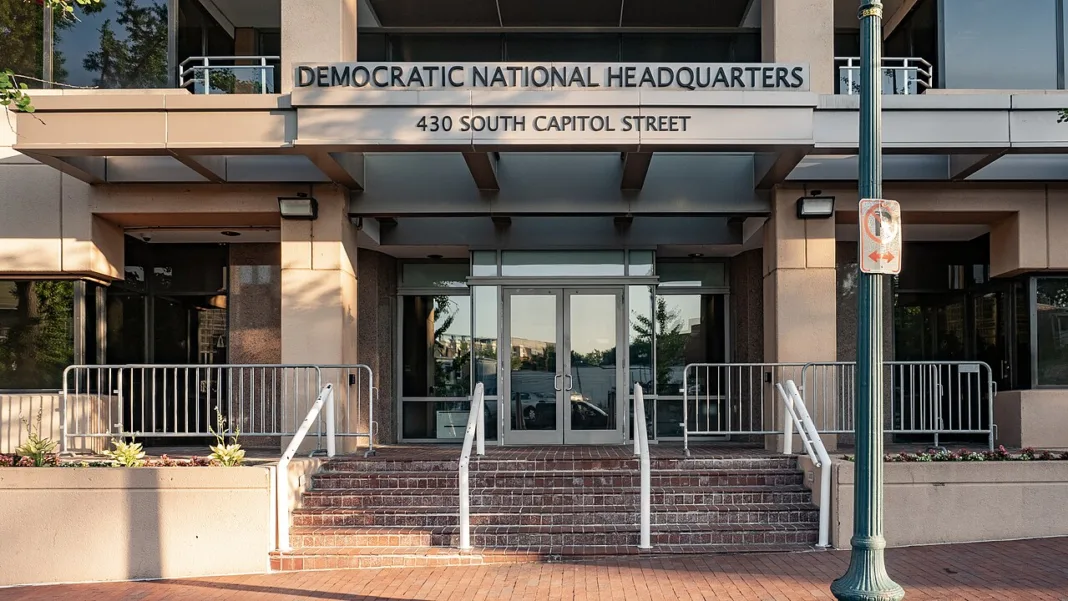



The Democratic National Committee announced Monday that its 2028 presidential primary will include 12 debates, beginning in June 2027, and a new requirement that participating candidates denounce dark-money spending. The framework sets early conditions for a potentially crowded nomination contest, with detailed eligibility thresholds due in January.
What happened
The DNC’s announcement schedules five debates in 2027 and seven in 2028. The first two are planned for June and July 2027, and the last for March 2028, subject to adjustments. Specific dates, locations and media partners for the first two events will be announced in January 2027.
Early debates can run over two consecutive nights if necessary, with no more than 20 qualifying participants across both nights. Candidates will be assigned randomly to lineups intended to preserve parity. Polling and other measures of support, including grassroots fundraising, will help determine eligibility; the numerical thresholds have not yet been announced.
Candidates must also sign the Fair Campaign Practices Pledge. The DNC says it requires them to denounce dark-money spending in the primary and refrain from joint fundraising agreements or coordinated primary spending with Democratic Party committees. Participants in unsanctioned debates will be ineligible for subsequent DNC debates, although single-candidate town halls and forums are allowed.
Reuters described dark money as election spending by organizations that do not disclose their donors. Its report said the pledge is intended to curb outside influence as Democrats prepare for a nomination fight without a clear front-runner.
CNN reported that candidates must designate a representative to raise complaints about spending by super PACs or certain nonprofits. If the DNC finds a violation, it will ask for a statement denouncing the spending. The committee plans a public tracker of complaints and denunciations.
The rule does not give the party legal power to stop an outside organization from spending, CNN reported. A super PAC can continue after a candidate denounces its activity. That leaves debate access and public accountability as the principal mechanisms described in the framework, rather than a legal prohibition on outside expenditures.
ABC News reported that six debates in 2028 are planned for the early-calendar states: South Carolina, Nevada, New Hampshire, New Mexico, Michigan and Virginia. The national framework does not yet name a Texas debate location. The committee’s January announcement will provide the first specific venues and dates.
How outlets covered it
Reuters led with the financial pledge, emphasizing the demand that contenders denounce secret-donor spending to obtain a place onstage. It situated the rule within a potentially contentious nomination battle between Democratic factions after the party’s midterm victories.
Associated Press foregrounded the 12-debate schedule and the prospect of a large field. Its account emphasized the debates’ role in attracting attention to candidates and narrowing the contest, alongside the forthcoming polling and fundraising criteria.
CNN treated the outside-spending pledge as the most significant change. It explained the complaint procedure and public tracker, described progressive support for the policy, and stressed that denouncing a group’s spending cannot legally compel that group to stop.
ABC News combined the calendar and pledge in its lead. It supplied the early-state breakdown and explained how a two-night format could accommodate numerous candidates. Its report portrayed the announcement as an early organizational milestone for the 2028 race.
The outlets shared the basic schedule and participation requirements. Reuters and CNN gave the money rules greater prominence, while AP and ABC devoted more attention to the debate calendar and management of a large field.
What’s disputed
The practical effect on outside spending remains unknown. A public denunciation may impose a political cost, but CNN’s account makes clear that it does not terminate a super PAC’s ability to advertise or otherwise spend. Whether the pledge changes donor behavior will depend on how campaigns and outside groups respond.
The immediate unanswered questions concern eligibility thresholds, venues and media partners. The DNC has committed to announcing those details for the first two debates in January. Until then, the broad framework establishes the timetable and conditions without identifying which candidates will qualify.
How this article was produced
This article was generated using AI from the sources linked below. It does not include firsthand reporting or interviews. Our editors monitor published articles and correct errors promptly. Claims attributed to outside sources have not been independently verified by this publication.
Found an error? Email corrections@thecivicbearing.com.
Sources
- Democratic National Committee — DNC Announces Framework for the 2028 Democratic Presidential Primary Debates (November 23, 2026)
- Reuters — US Democrats require 2028 candidates to reject dark money to make debate stage (November 23, 2026)
- Associated Press — Democrats plan 12 debates for their 2028 presidential primary, with the first in June (November 23, 2026)
- CNN — DNC plans to hold 12 debates for 2028 primary – with a new rule for Democrats who want in (November 23, 2026)
- ABC News — Democrats holding 12 debates in 2028 cycle, requiring candidates denounce ‘dark money’ (November 23, 2026)