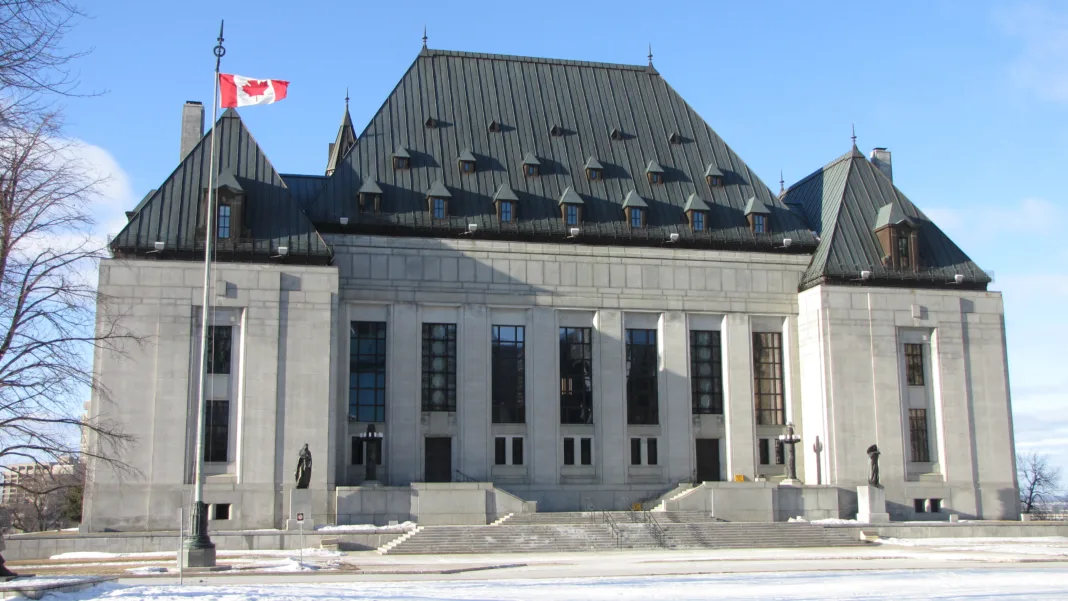



Canada’s Supreme Court upheld most of Quebec’s religious-symbols law November 27, preserving restrictions on designated public employees while protecting elected legislators from its face-covering requirement. The decision also addressed how legislatures can override constitutional rights and what courts may still declare about those laws.
What happened
In English Montreal School Board v. Quebec, the court upheld the province’s use of constitutional override powers for Bill 21. It rejected challenges based on minority-language education rights and held that the Charter’s guarantee of equal application to men and women does not itself create a separate right capable of invalidating the law.
The court ruled that requiring National Assembly members to uncover their faces infringes their democratic rights. It also said invoking the override does not prevent courts from declaring legislation inconsistent with protected rights, although it issued no such declaration in this case.
The Associated Press reported that the 2019 ban covers teachers, police and other authority figures, including restrictions on hijabs, turbans, skullcaps and crosses. The override requires renewal every five years.
Reuters described the ruling as a political victory for Quebec’s sovereigntist government, with implications for Prime Minister Mark Carney’s efforts to maintain Canadian unity.
How outlets covered it
Associated Press emphasized affected religious minorities and opponents’ promises to continue political advocacy.
Reuters put the decision’s political consequences near the top, linking it to Quebec sovereignty and national unity. It also highlighted the exception protecting legislators who wear religious face coverings.
AP emphasized affected workers; Reuters gave more space to national politics.
What’s disputed
Quebec maintains that the restrictions protect secular government. Opponents argue they discriminate against religious minorities, particularly Muslim women. English Montreal School Board chair Joe Ortona told AP that advocacy would continue despite the court’s decision.
Opinion: The Civic Bearing’s Take
This section is opinion and reflects The Civic Bearing’s conservative perspective.
Public institutions should serve citizens impartially. That principle does not require treating an employee’s visible faith as proof of bias. A teacher’s conduct and professional judgment provide a better basis for accountability than a head covering or cross.
The court has resolved the constitutional challenges before it, but lawful government power still deserves scrutiny. Legislators should weigh the cost of excluding otherwise qualified people from public service. Protecting religious liberty and demanding fair treatment of every citizen should be compatible goals.
How this article was produced
This article was generated using AI from the sources linked below. It does not include firsthand reporting or interviews. Our editors monitor published articles and correct errors promptly. Claims attributed to outside sources have not been independently verified by this publication.
Found an error? Email corrections@thecivicbearing.com.
Sources
- Supreme Court of Canada — English Montreal School Board v. Quebec, Case in Brief (November 27, 2026)
- Associated Press — Canada’s Supreme Court largely upholds Quebec ban on religious symbols for public servants (November 27, 2026)
- Reuters — Canada’s Supreme Court upholds Quebec ban on religious symbols for public servants (November 27, 2026)