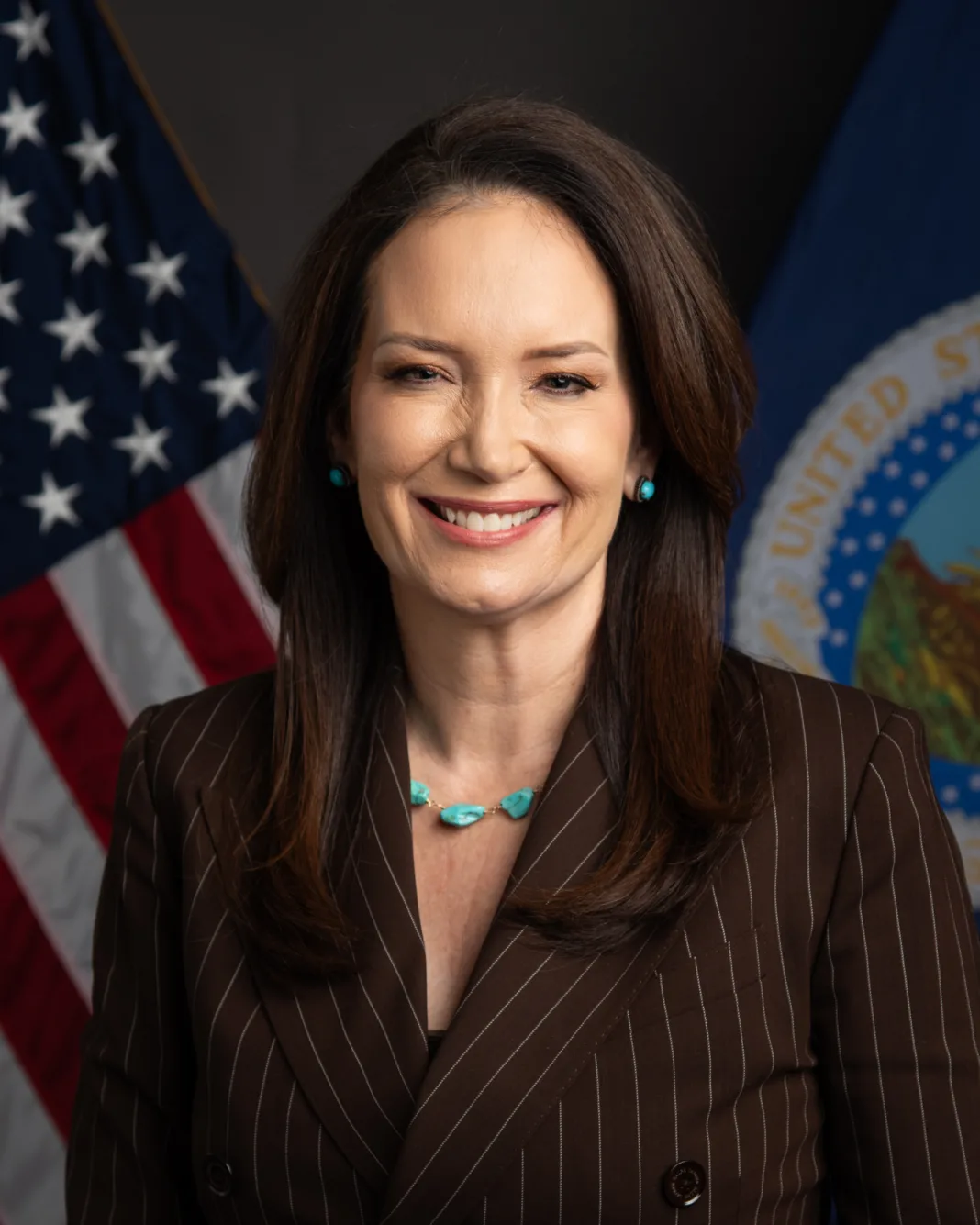



A federal judge in San Francisco issued a preliminary injunction November 19 limiting Agriculture Secretary Brooke Rollins’s religious messages to employees from her official account. The order found workers likely to succeed on their constitutional claim while preserving Rollins’s ability to discuss her faith with interested colleagues.
What happened
U.S. District Judge Trina L. Thompson identified Rollins’s position of authority, her department-wide official emails and language assuming shared religious beliefs as factors creating coercive pressure. Her 21-page ruling singled out a December 23, 2025, Christmas message and an April 5, 2026, Easter message as crossing constitutional boundaries.
According to The Associated Press, the order drew its practical limits from USDA’s own guidance. Rollins must stop when a colleague asks her to stop, avoid persistent unwelcome advances and refrain from using official authority to pressure subordinates. She may share why her faith matters, discuss religion with interested coworkers and politely invite colleagues to religious services or events.
The agency is considering an appeal. Reuters reported that USDA described the injunction as an unprecedented effort to silence a Cabinet secretary. The department argued that the emails expressed Rollins’s personal views about holidays rather than requiring religious participation or conformity.
Employees offered a different account. Their complaint alleged that the messages favored workers who shared Rollins’s Christianity and pressured others to hide their beliefs or appear to agree with hers, Reuters reported. It also alleged supervisors warned that objections would cause trouble. Those were allegations advanced by the plaintiffs.
The case was brought by the National Federation of Federal Employees and USDA workers. Federal News Network reported that the judge rejected the suggestion that employees could simply ignore messages from the secretary: the same official account also carried information about department reorganization and other workplace updates.
Thompson did not accept every legal theory. Federal News Network reported that she dismissed the Administrative Procedure Act claims because the emails were not final agency actions. The constitutional claim remained, with the preliminary injunction providing relief while the litigation continues.
How outlets covered it
The Daily Beast led with the order to stop proselytizing to staff and used a mocking nickname for Rollins in its headline. Its account emphasized the explicitly Christian content of the Christmas and Easter messages and the judge’s concern about government influence over private religious belief.
Reuters focused its headline on the official email account. It presented USDA’s defense alongside employees’ claims of pressure, then placed the case within a broader debate about administration officials’ religious language.
Reuters focused its headline on the official email account and the boundaries the judge imposed. It presented USDA’s defense alongside employees’ claims of pressure, then placed the case within a broader debate about religious language used by administration officials. Its account gave prominence to the distinction between official communications and Rollins’s personal capacity.
Federal News Network emphasized the workplace consequences and the preliminary nature of the ruling. It explained why the judge thought staff could not realistically opt out, and separated the surviving constitutional case from the dismissed administrative-law claims. It also reported USDA’s consideration of a prompt appeal.
The sharpest difference was in the headlines: The Daily Beast stressed proselytizing, while The Western Journal stressed restrictions on Christian expression. Reuters and Federal News Network put more emphasis on official channels, workplace pressure and the scope of the injunction.
What’s disputed
USDA and the plaintiffs disagree over whether the holiday messages were personal expressions or coercive uses of a supervisor’s authority. The department denied seeking conformity; employees said the messages made them feel excluded or pressured. Thompson found the constitutional challenge sufficiently strong to justify preliminary relief.
The injunction leaves personal religious expression protected. The Western Journal reported that Rollins can still talk about her faith with interested employees and invite coworkers to religious events. The unresolved question is how those protections apply when the agency head communicates through an official channel to an audience that includes unwilling recipients.
The court set a December 17 case-management conference, with a joint statement due December 10. Those dates appear in the order. USDA said it was evaluating an appeal; its announcement did not itself change the injunction.
How this article was produced
This article was generated using AI from the sources linked below. It does not include firsthand reporting or interviews. Our editors monitor published articles and correct errors promptly. Claims attributed to outside sources have not been independently verified by this publication.
Found an error? Email corrections@thecivicbearing.com.
Sources
- U.S. District Court, Northern District of California — Preliminary injunction order, NFFE v. USDA (November 19, 2026)
- Reuters — Judge orders US agriculture chief to stop sending religious emails from official account (November 19, updated November 20, 2026)
- Federal News Network — Agriculture secretary’s religious emails to staff likely violate First Amendment, judge rules (November 20, 2026)
- The Western Journal — Federal Judge Orders Trump Cabinet Secretary to Stop Praising Jesus in Emails (November 20, 2026)
- The Daily Beast — Trump’s Dairy Queen Brooke Rollins Is Ordered to Stop With the Religious Emails (November 20, 2026)
- The Associated Press — Judge says agriculture secretary’s religious emails were unconstitutional (November 19, 2026)