

Army Sgt. Jian Zhao pleaded guilty on November 23 to conspiring to gather and transfer national defense information to people connected to China. The 37-year-old, stationed at Joint Base Lewis-McChord in Washington, faces up to 10 years in prison and is scheduled for sentencing on March 1, 2027, the Justice Department said.
What happened
The Justice Department’s November 24 announcement describes a conspiracy running from about November 2021 through March 2025. Prosecutors said Zhao used military access to obtain documents and equipment for buyers in China, receiving thousands of dollars in overseas payments.
Zhao enlisted in 2017 and served as a battery supply sergeant. His duties came with a security clearance and authorized access to sensitive military information and equipment. According to the department’s account of court documents, he used that access to collect material for the conspiracy rather than limiting it to his official work.
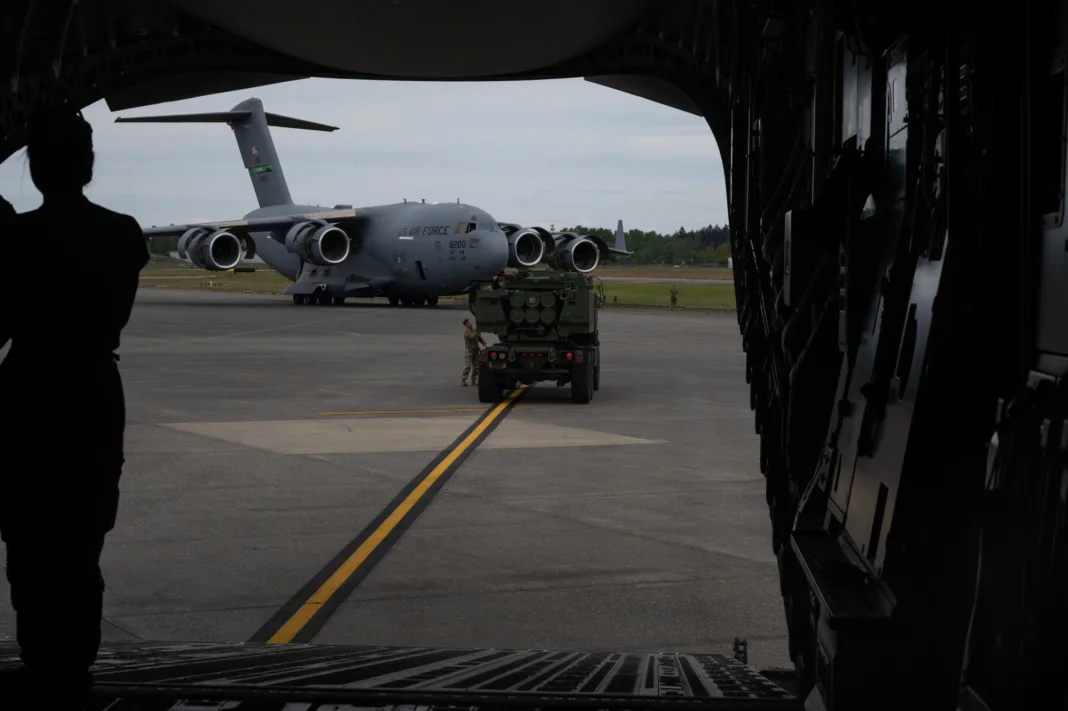
The material included excerpts from technical manuals for the High Mobility Artillery Rocket System, known as HIMARS. Zhao also offered military computers and government hard drives for sale and photographed restricted presentations and documents covering Army operations, communications networks, rocket and missile systems, and military exercises.
Prosecutors said he used his personal cellphone to photograph controlled documents and removed military storage devices and other government property without authorization. The announcement says Zhao sold materials he himself described as sensitive, secret or top secret. It does not provide a document-by-document public inventory of everything transferred.
The conspiracy involved former Army soldier Ruoyu Duan, who lived in Hillsboro, Oregon, and other participants. The Justice Department said Duan recruited active-duty personnel, including Zhao, to provide defense-related information. He also connected participants with China-based buyers and helped arrange communication and financial transactions. Duan previously pleaded guilty to conspiracy to transmit national defense information.
Federal agents arrested Zhao at his home in Lacey, Washington, on March 6, 2025. They recovered approximately $30,000 in cash, electronic devices and multiple Army hard drives, according to the department. The arrest ended the period of the conspiracy described in the announcement; the guilty plea came more than a year later.
Under his plea agreement, Zhao agreed to forfeit $17,500 as proceeds of the offense and abandon his interest in roughly $30,000 seized during the investigation. The two amounts are separately identified in the government’s announcement. The department did not describe all of the seized cash as proven proceeds of this offense.
The maximum penalties include a $250,000 fine and up to three years of supervised release, in addition to the possible prison term. The 10-year figure is the statutory maximum, not a sentence already imposed. The March hearing will determine the punishment.
The FBI investigated with assistance from Army Counterintelligence Command and other federal partners. In the Oregon U.S. attorney’s announcement, Brig. Gen. Sean Stinchon, the command’s leader, urged service members to report suspicious outreach. Officials described the case as an abuse of the trust attached to military access and security clearances.
Stars and Stripes, citing The Oregonian’s account of the hearing, reported that Zhao entered his plea in federal court in Portland with a Mandarin interpreter. It also reported that prosecutors planned to seek the low end of a sentencing-guideline calculation based on his conduct and criminal history.
How outlets covered it
Stars and Stripes opened with the possible 10-year prison term and emphasized the military material involved, including HIMARS technical information. Its account also described Zhao’s service background, the March 2025 arrest and the earlier guilty plea by Duan.
Military Times also led with the maximum prison exposure, then traced how Zhao’s clearance and supply duties gave him access. It highlighted the recruitment and payment arrangements, the use of a personal phone and the money surrendered under the plea agreement.
Both reports emphasized access, financial gain and the security implications of transferring military information. Their central accounts followed the same chronology and identified the guilty plea as the new development, rather than a newly discovered conspiracy.
What’s disputed
Zhao’s guilty plea resolves his admission to the conspiracy charge; his sentence remains undecided. The public Justice Department announcement does not quantify any operational damage from the transfers or detail the classification of every item. It identifies the recipients as connected to China, while the FBI characterized his conduct as providing sensitive information to the Chinese government.
How this article was produced
This article was generated using AI from the sources linked below. It does not include firsthand reporting or interviews. Our editors monitor published articles and correct errors promptly. Claims attributed to outside sources have not been independently verified by this publication.
Found an error? Email corrections@thecivicbearing.com.
Sources
- Justice Department — Active-duty Army sergeant pleads guilty in national defense information conspiracy (November 24, 2026)
- U.S. Attorney’s Office, District of Oregon — Army sergeant’s guilty plea (November 23, 2026)
- Stars and Stripes — Army sergeant pleads guilty to selling military secrets to China (November 24, 2026)
- Military Times — Army sergeant pleads guilty in plot to sell military secrets to China (November 24, 2026)