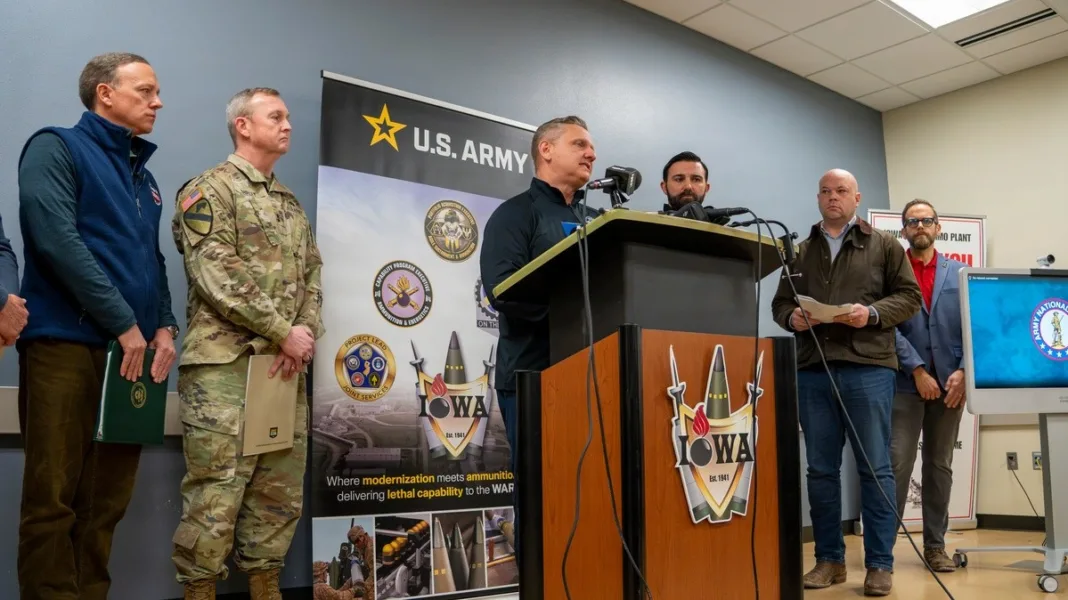


The U.S. Army detonated the nation’s stored stockpile of degraded lead azide Wednesday at the Iowa Army Ammunition Plant near Middletown, Iowa, according to the Associated Press. The controlled blast involved about five tons of the lead-containing explosive, which officials said had become dangerously unstable.
Why the Army destroyed the stockpile
The material was stored in 68 drums at the plant. The Army said inspections found that the lead azide had degraded and crystallized, making it vulnerable to friction, vibration, heat or shock. Officials warned that moving or treating the drums could trigger an uncontrolled explosion, and the Army concluded that a controlled detonation was the safest available option.
The Army’s announcement described the operation as an in-place detonation conducted by explosive ordnance disposal specialists. The plan drew legal challenges from environmental groups concerned about possible lead dust and effects on nearby residents, farms and the environment. A federal appeals court allowed the operation to proceed.
Residents were told to take precautions
Before the detonation, emergency officials advised people in affected areas to evacuate or shelter indoors, close windows and doors, and limit outside air entering their homes. The Associated Press reported that video showed two white plumes rising above the site and dissipating shortly after the blast.
The EPA said it had collected more than 1,200 air, soil and water samples before the operation and would continue monitoring during and after the detonation. The agency reported no lead detected in the air before the blast. Post-detonation sampling will help determine whether lead was deposited beyond the installation.
What happens next
Officials have said monitoring and follow-up sampling will continue. Residents should follow instructions from local emergency management and public health agencies, including any guidance on when it is safe to return and how to clean outdoor surfaces. The Army has also said it is reviewing its storage facilities after the discovery.
Opinion: The Civic Bearing’s Take
This section is opinion and reflects The Civic Bearing’s conservative perspective.
Protecting nearby families and first responders had to be the priority once officials determined the material could detonate without warning. The decision to proceed also makes clear why the public deserves prompt, accessible results from air, soil and water testing. Federal and state agencies should publish the data, explain what it means for residents and farms, and keep the community informed until monitoring is complete.
How this article was produced
This article was generated using AI from the sources linked below. It does not include firsthand reporting or interviews. Our editors monitor published articles and correct errors promptly. Claims attributed to outside sources have not been independently verified by this publication.
Found an error? Email corrections@thecivicbearing.com.
Sources
- Associated Press — The Latest: Army detonates entire US stockpile of lead azide in Iowa (November 25, 2026)
- U.S. Army — Controlled detonation announcement and safety information (November 24, 2026)
- U.S. Environmental Protection Agency — Interagency public update on the Iowa Army Ammunition Plant (November 24, 2026)