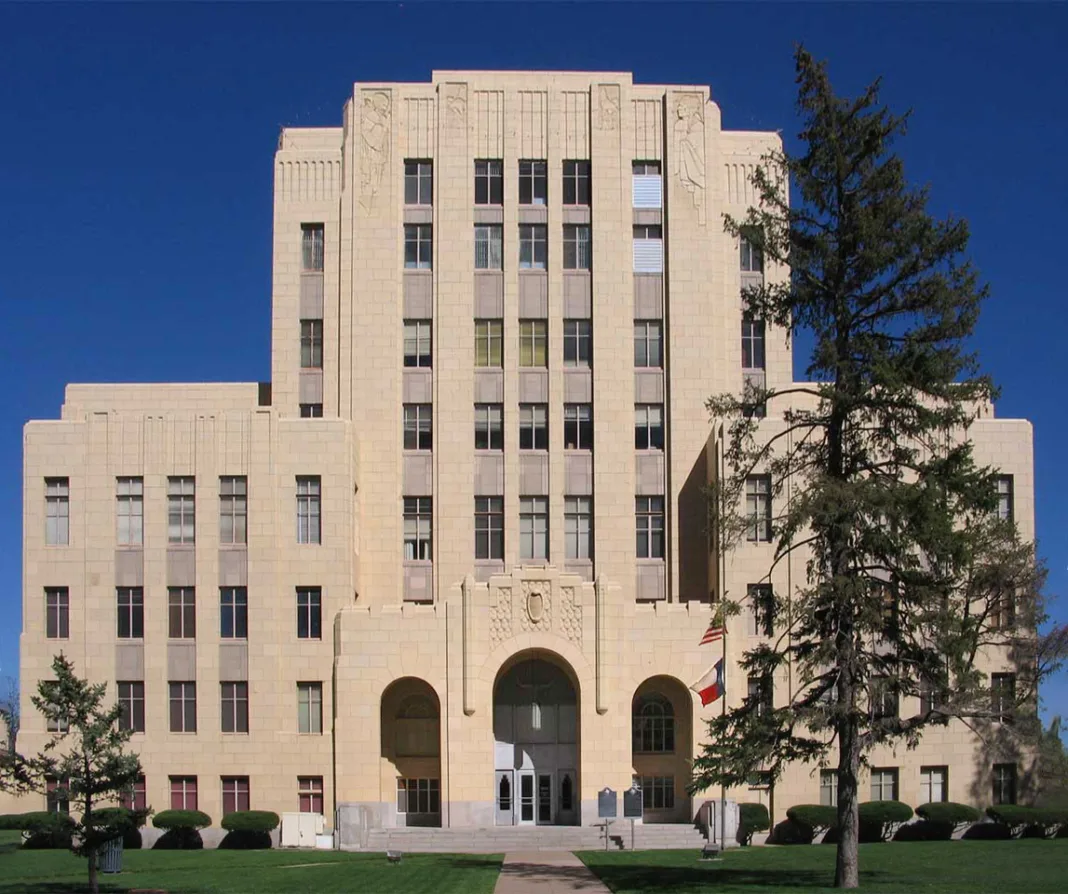



A federal judge dismissed a Potter County Republican Party lawsuit November 24 that sought a statewide hand count of paper ballots before Texas could certify its federal election results. U.S. District Judge Matthew Kacsmaryk ruled that the plaintiffs had not established the concrete, personal injury required to bring the case in federal court.
What happened
The 13-page order in Potter County Republican Party v. Benge dismissed the case without prejudice and disposed of the remaining motions as moot, including the request for a preliminary injunction. It did not order the additional statewide count the plaintiffs wanted.
The lawsuit was filed October 27 against Christy Benge, the Potter County elections administrator. The plaintiffs sought to have her represent a class of county election officials across Texas. An amended complaint added congressional candidate Alexander Hale, while retaining claims about voting-system security and differing county procedures.
Kacsmaryk’s decision turned on Article III standing, which limits federal courts to actual cases and controversies. The order explained that a plaintiff must identify an injury that is concrete and particular to that plaintiff, connected to the defendant’s conduct and capable of being addressed by the court.
The plaintiffs argued that some voting machines contained components made by foreign adversaries and could be vulnerable to manipulation, including attacks involving artificial intelligence. They cited national-security assessments and testimony concerning voting-system vendors. The judge concluded that the possibility of attacks did not establish that these plaintiffs faced an impending injury.
On that point, the order said the plaintiffs had failed to show that adversaries affected a Texas ballot. The court also found that their broader concern about election security applied to voters generally, without explaining how the named plaintiffs were affected personally. Those were separate defects in their attempt to establish standing.
Their second argument concerned differences in county procedures for investigating discrepancies between voters and counted ballots. They alleged that identical ballots could receive different protection depending on where they were cast. Kacsmaryk found that this, too, described a generalized grievance and lacked facts showing a concrete injury in Potter County.
The judge said variations in how officials investigate possible discrepancies do not, by themselves, show that ballots receive unequal weight. The plaintiffs would have needed facts showing an error that went undetected or was discovered without sufficient correction. The order found that their allegations did not make that showing.
Hale’s candidacy did not cure the problem, the court ruled, because Potter County was outside the congressional district where he ran. The party also failed to establish that its members had individual standing or that the challenged procedures specifically damaged its electoral prospects. Allegations about candidates in possible future elections were insufficient.
The court had not certified the proposed defendant class. That mattered because the plaintiffs had to establish standing against the named Potter County official before seeking relief through a statewide class. References to discrepancies in Harris, Dallas, Randall and Lubbock counties did not establish that required connection, the judge wrote.
Separately, the Texas Secretary of State’s Elections Division announced November 20 that the state’s first statewide risk-limiting audit was complete. The agency said all counties participated, the audit met its 10% risk limit in the first round and the results provided strong statistical evidence that the U.S. Senate outcome was correct. No second round was needed.
The November 24 order places the state canvass window between November 21 and December 7, followed by certification. The dismissal leaves the requested statewide federal-court intervention ungranted as that process continues.
How outlets covered it
Democracy Docket emphasized the plaintiffs’ failure to establish standing, describing the requested statewide count and the court’s rejection of speculative security claims. It also connected the decision to the constitutional limits on federal judicial authority.
The Daily Beast framed the ruling as a Republican setback.
Both highlighted the failed lawsuit.
What’s disputed
The plaintiffs argued that existing safeguards were inadequate; the court found that their allegations did not establish jurisdiction. The ruling resolves standing and identifies what the plaintiffs failed to show in this case, including a personal injury tied to Potter County’s administration.
The completed state audit concerned the Senate outcome, while the lawsuit sought relief covering federal elections statewide. Those have different scopes. The November 24 order supplies no appeal schedule or date for any new complaint.
How this article was produced
This article was generated using AI from the sources linked below. It does not include firsthand reporting or interviews. Our editors monitor published articles and correct errors promptly. Claims attributed to outside sources have not been independently verified by this publication.
Found an error? Email corrections@thecivicbearing.com.
Sources
- U.S. District Court — Potter County Republican Party v. Benge, memorandum opinion and order (November 24, 2026)
- Texas Secretary of State — Risk-Limiting Audit Completed (November 20, 2026)
- Democracy Docket — Trump-appointed judge tosses Texas GOP lawsuit seeking to block election certification (November 24, 2026)
- The Daily Beast — Texas election lawsuit (November 25, 2026)