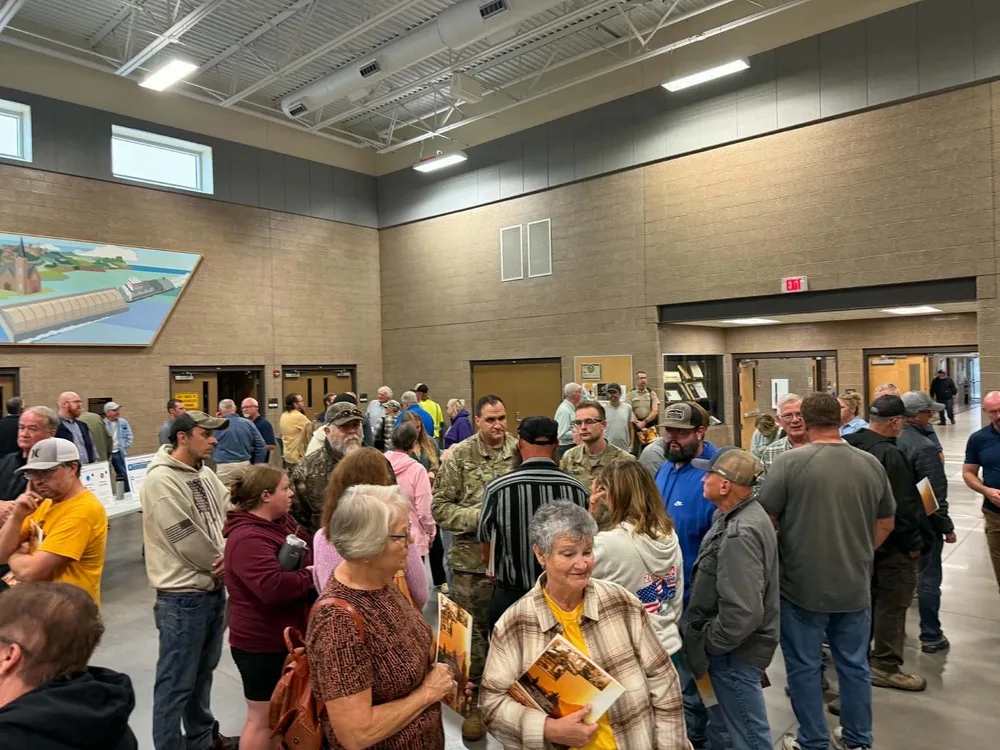


The Army has postponed the controlled detonation of degraded lead azide at its ammunition plant in Middletown, Iowa, from Friday, November 20, until Monday, November 23. The delay gives officials more time to communicate with surrounding communities, while the Army says approaching colder weather limits how long it can safely wait.
What happened
Acting Army Secretary Adam Telle directed Army Materiel Command to postpone the operation, according to the Army’s November 19 announcement. He described Monday as the latest available window before a forecast temperature drop could make the unstable material more dangerous. He also emphasized the need for accurate information and continued engagement with state and local officials.
The new date replaces the Friday schedule described in The Civic Bearing’s earlier report on the planned detonation. The postponement changes when the operation is expected to occur; it does not cancel the Army’s plan to destroy the stockpile in place.
The operation involves 68 drums of lead azide, a substance used in detonators. Fox News reported that officials discovered the material had become unstable after water evaporated from its stabilizing bath, allowing recrystallization. The Army considered handling or relocating it unsafe.
The Environmental Protection Agency’s emergency-permit notice explains that recrystallization increased the material’s sensitivity to friction and shock. Disturbing the containers could trigger an unintended explosion, the agency said. Its permit authorizes storage and intentional detonation at a location not covered by the plant’s existing hazardous-waste permit.
The permit took effect November 13 and requires sampling and monitoring before, during and after the detonation, public notifications, cleanup and reporting. Those requirements address both the explosive hazard and the environmental consequences of the disposal operation. EPA’s authorization does not mean that the detonation will release no lead particles.
The Associated Press reported that environmental groups sought emergency court action before the postponement and that Governor Kim Reynolds had called for a delay. The legal challenge and the Army’s scheduling decision are separate developments.
NBC Chicago reported that Senator Chuck Grassley linked the delay to questions from Iowans and the need for better public communication. Illinois lawmakers also sought a postponement because particles could settle beyond the plant, including on homes and farmland.
NBC’s report described plans to wet the ground and use misters to reduce airborne material, with air, soil and water testing during and after the operation. The exposure concerns extend beyond the brief blast itself to particles that could land on outdoor surfaces. Updated instructions for the Monday operation remain relevant to residents and local institutions that had prepared for Friday.
How outlets covered it
Fox News led with the rescheduled date and the narrowing weather window. It emphasized the material’s instability, the emergency permit and the Army’s explanation for destroying it where it is stored. The report also connected the decision to Reynolds’ request and environmental lawsuits.
NBC Chicago emphasized Grassley’s announcement and regional exposure concerns. Its account gave substantial attention to Illinois, residents’ questions, a public-health professor’s concerns and planned mitigation and testing. It focused on what the delay means for nearby communities as well as the Army’s disposal problem.
The Associated Press framed the delay around public objections and the disruption to communities. It described residents’ unanswered questions and the practical consequences for schools that had already changed Friday schedules.
Fox placed greater emphasis on instability and the deadline imposed by weather. NBC and AP devoted more attention to communication, exposure concerns and preparations outside the plant.
What’s disputed
The central disagreement is whether the disposal plan and its safeguards adequately protect surrounding communities. The Army and EPA describe an urgent hazard that cannot safely be relocated. Residents and environmental groups have questioned the potential contamination and whether they received enough information to prepare.
The remaining questions concern the actual reach and concentration of deposited lead, the results of monitoring and any cleanup that becomes necessary. EPA’s permit establishes testing and reporting obligations; those measurements have not yet been produced for the postponed operation. Monday is the Army’s announced target, while further official notices and the outcome of the legal challenge remain important developments to watch.
How this article was produced
This article was generated using AI from the sources linked below. It does not include firsthand reporting or interviews. Our editors monitor published articles and correct errors promptly. Claims attributed to outside sources have not been independently verified by this publication.
Found an error? Email corrections@thecivicbearing.com.
Sources
- U.S. Army — Postponed: Lead Azide Detonation (November 19, 2026)
- U.S. EPA — Public Notice: Iowa Army Ammunition Plant, Middletown, Iowa (November 16, 2026; updated November 18)
- Fox News — Army delays controlled detonation of unstable bomb-making chemical in Iowa (November 19, 2026)
- NBC Chicago — Planned lead azide detonation in Iowa will be delayed (November 19, 2026)
- Associated Press — US Army delays detonation of bomb-making chemicals in Iowa after public safety concerns raised (November 19, 2026)