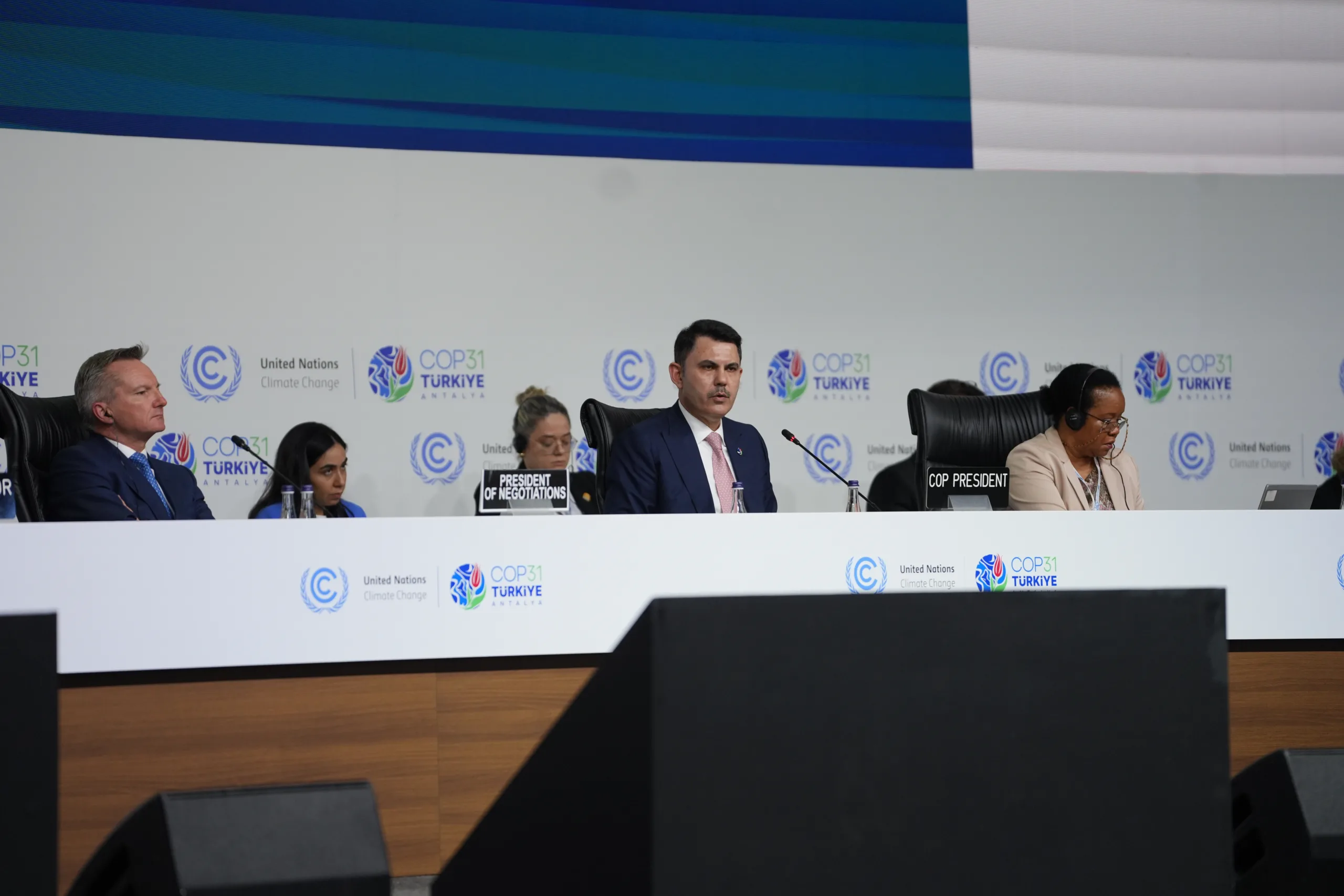



COP31 climate talks in Antalya, Turkey, ended Sunday without an overarching political agreement after the European Union and other countries rejected a proposal that did not explicitly mention fossil fuels. The breakdown followed overtime negotiations, Euronews reported, turning the earlier dispute over draft language into a failed attempt to adopt the summit’s main declaration.
What happened
COP31 President Murat Kurum acknowledged that the text lacked agreement and had not been adopted. Ireland’s climate minister, Darragh O’Brien, speaking for the EU, said the bloc would not endorse an outcome that omitted fossil fuels.
Reuters reported that Kurum ruled out producing another version of the text once the lack of consensus became clear. Multiple countries and negotiating groups had already said the proposal was unacceptable. The announcement closed off the immediate route of another presidency-written compromise.
The failure concerns the conference’s main political outcome, known as a cover decision. The Associated Press reported that negotiators had made progress on smaller issues even though the overarching agreement failed. Disagreements involved both fossil-fuel language and money.
This is a major development since the earlier proposal remained under negotiation. Countries have now rejected that route to a shared political declaration, rather than simply continuing to bargain over an unsigned draft.
The broader negotiating process contained 165 mandated agenda items, UN climate chief Simon Stiell explained in his November 19 remarks. He described the presidency-led decision as one part of work taking place across numerous negotiating rooms. Those remarks preceded the final breakdown, but explain why a failed headline declaration does not by itself describe the outcome of every individual negotiating item.
Stiell also stressed that the participating countries own the process, guided by each year’s presidency. He called for balanced outcomes across the agenda and acknowledged the complexity of both the cover decision and the mandated negotiations. His warning placed responsibility for agreement on the parties, rather than on the secretariat alone.
How outlets covered it
Associated Press framed the collapse around irreconcilable disputes over fossil fuels and funding. Its account separated failure on the main agreement from progress on smaller matters, giving readers a distinction between the political breakdown and the conference’s wider work.
Reuters focused on the procedural turning point: Kurum’s announcement that he would not prepare another draft in the absence of consensus. Its concise report centered on what the presidency would do next after negotiating groups rejected the available text.
Euronews emphasized the EU’s rejection and the omission of fossil fuels. It traced how the language changed during the negotiations and included reactions from UN Secretary-General António Guterres and Australian climate minister Chris Bowen, both of whom expressed disappointment at the result.
The reports shared the same central outcome. AP gave more attention to the breadth of the impasse, Reuters to the decision against another draft, and Euronews to the objections and diplomatic reaction.
What’s disputed
The unresolved question is how governments will pursue the political commitments that failed to win agreement in Antalya. The conference ended without a shared answer on the main declaration.
Opinion: The Civic Bearing’s Take
This section is opinion and reflects The Civic Bearing’s conservative perspective.
A summit should be judged by practical results, rather than by whether negotiators can announce a deal at any price. Governments should explain which commitments they can carry out, how much they would cost and what benefits they expect. An agreement that conceals fundamental disagreement would give taxpayers little basis for holding leaders accountable.
The next effort should favor clear obligations, measurable progress and room for countries to choose workable energy policies. Reliable power and responsible public spending deserve a place alongside environmental goals. Diplomatic disappointment should prompt closer scrutiny of proposed commitments and their economics, rather than a rush to endorse another declaration simply to avoid admitting disagreement.
How this article was produced
This article was generated using AI from the sources linked below. It does not include firsthand reporting or interviews. Our editors monitor published articles and correct errors promptly. Claims attributed to outside sources have not been independently verified by this publication.
Found an error? Email corrections@thecivicbearing.com.
Sources
- Associated Press — UN climate talks break down (November 22, 2026)
- Reuters — COP31 talks set to collapse without political deal (November 22, 2026)
- Euronews — COP31 talks fail after final proposal rejected (November 22, 2026)
- UN Climate Change — Simon Stiell’s press-conference remarks (November 19, 2026)