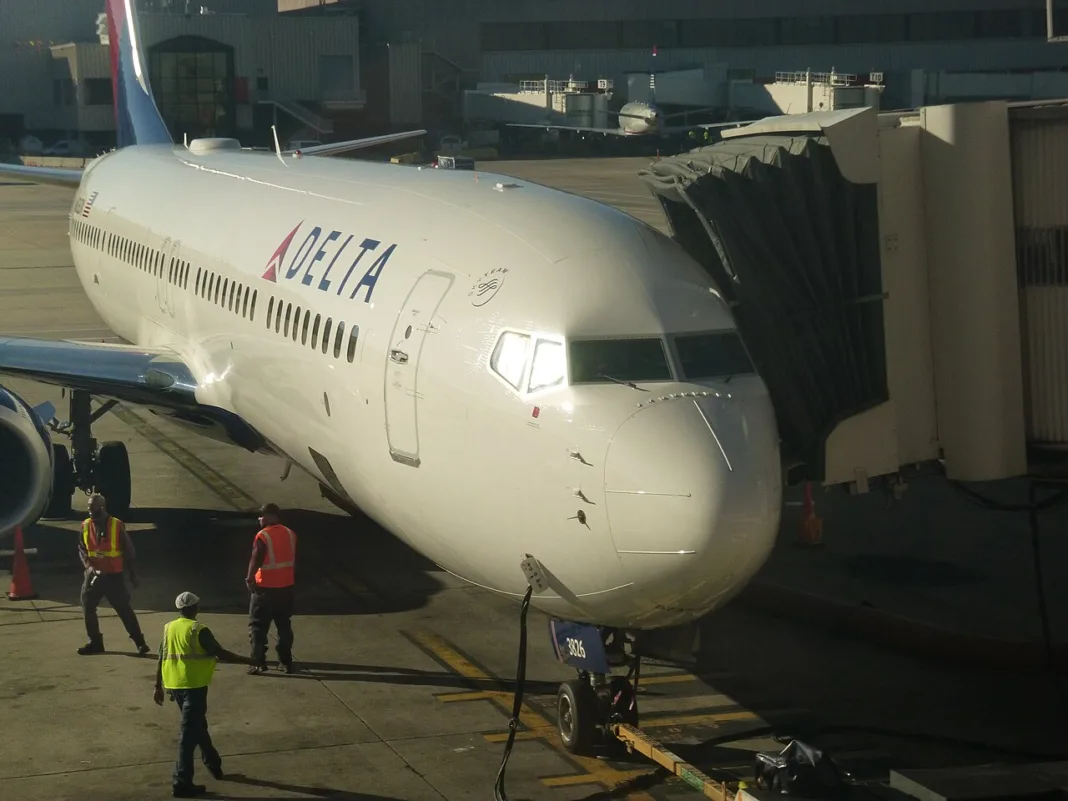



Delta Air Lines said its weight-and-balance automation system was operating again Sunday afternoon after a malfunction delayed flights across the country ahead of Thanksgiving. The airline used manual procedures while it restored the system, and the Federal Aviation Administration said the disruption did not involve its air-traffic systems.
What happened
The problem centered on software used to calculate aircraft weight and balance before departure. Reuters reported that those calculations help ensure an aircraft stays within safety limits and maintains the center of gravity required for stable flight. Delta said it was coordinating with air-traffic controllers to reduce congestion at its Atlanta hub.
The Atlanta Journal-Constitution reported that the airline requested a ground stop at Hartsfield-Jackson Atlanta International Airport. Restrictions subsequently shifted to a ground-delay program, and both were lifted before noon. The company told the newspaper shortly before 4 p.m. that departure weight-and-balance automation was functioning again.
The end of the restriction and the restoration of software did not mean every disrupted itinerary immediately returned to schedule. Delta and Delta Connection had about 5,000 flights scheduled Sunday, the newspaper reported. It said most delays and cancellations were linked to the technical problem, while some involved bad weather in the Northeast.
At its 4:37 p.m. Eastern update, ABC News reported more than 1,600 delayed Delta flights nationwide. The airline said its systems had returned to normal and that the problem was not a computer hack. Atlanta accounted for most delays, but flights traveling to the hub from other airports were also affected.
The Associated Press’s later Sunday account cited FlightAware data showing roughly 2,000 Delta flights delayed, or 58% of the carrier’s flights. Those figures describe a later snapshot than earlier reports and do not establish that every delayed flight had the same cause.
Delta told ABC it was rebooking travelers onto alternative itineraries and supplying meals and hotel rooms where necessary. Customers whose flights were canceled and who no longer wanted to travel were being refunded, the airline said. Earlier in the day, staff had relied on manual workarounds to dispatch aircraft safely while automation was unavailable.
How outlets covered it
Reuters presented the event as an operational interruption, emphasizing the airline’s statement that automation was working and its coordination with controllers. It also explained why the weight-and-balance calculation is a required safety step before takeoff.
The Atlanta Journal-Constitution emphasized the effect on Delta’s home hub and the timing of the ground restrictions. Its account separated the end of the FAA measures before noon from the airline’s later confirmation that the software was operational.
ABC News focused on the nationwide delay count, the airline’s rejection of a hacking explanation and its assistance for affected customers. Its afternoon update included the restoration announcement rather than leaving the morning outage as the latest status.
The Associated Press highlighted the scale of disruption during Thanksgiving travel, using FlightAware totals to show how many flights were delayed. Its later count was higher than the afternoon total in ABC’s update.
The reports shared the same basic explanation: Delta’s automation failed and manual procedures were used. Their different delay totals reflected reporting at different times, while the Atlanta coverage gave more detail about the local restrictions.
What’s disputed
A detailed technical explanation of the failure was not included in the restoration statements reported by the outlets. Delta said it was not a hack, and the FAA separately said its air-traffic systems were not responsible. The reports do not establish a connection with earlier outages at other organizations.
For passengers deciding whether to abandon a disrupted trip, Transportation Department guidance says a canceled flight qualifies for a refund when the customer declines further travel or alternative compensation. Significant delays or changes can also qualify when the passenger chooses not to proceed.
The department defines a significant late arrival as at least three hours for a domestic itinerary or six hours for an international one. Other qualifying changes include different departure or arrival airports and additional connections. A short delay alone therefore does not establish the same refund entitlement as a cancellation or qualifying significant change.
How this article was produced
This article was generated using AI from the sources linked below. It does not include firsthand reporting or interviews. Our editors monitor published articles and correct errors promptly. Claims attributed to outside sources have not been independently verified by this publication.
Found an error? Email corrections@thecivicbearing.com.
Sources
- Reuters — Delta automation restored (November 22, 2026)
- Atlanta Journal-Constitution — Atlanta restrictions and recovery (November 22, 2026)
- ABC News — Delay totals and customer assistance (November 22, 2026)
- Associated Press — Thanksgiving flight disruption (November 22, 2026)
- U.S. Transportation Department — Refund guidance (accessed November 22, 2026)