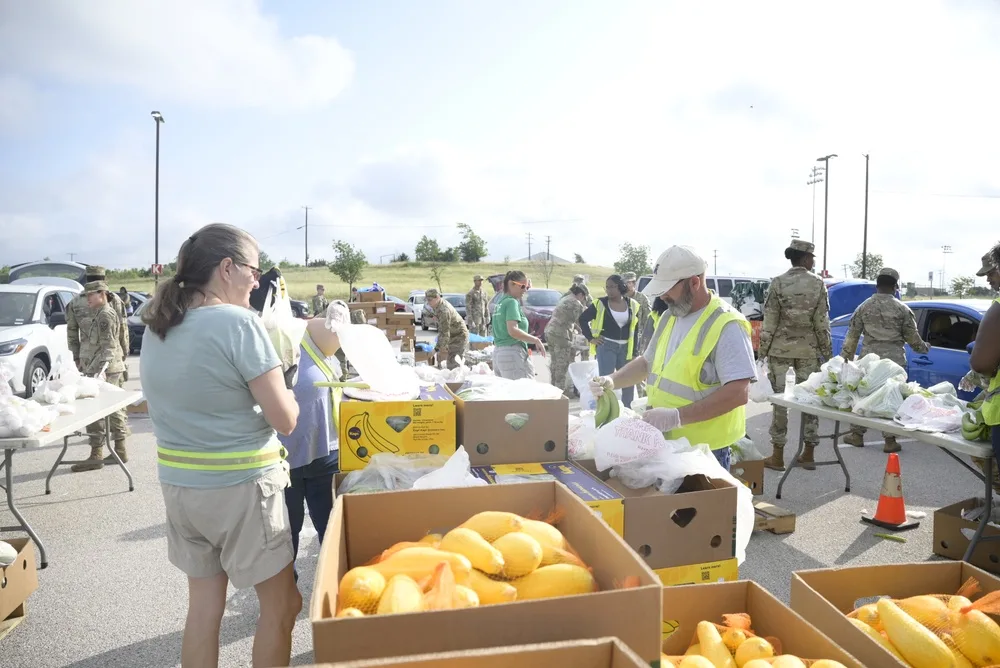


Houston Food Bank bought no turkeys for this Thanksgiving because of their cost, its chief executive told The Texas Tribune in reporting published November 25. Food banks elsewhere in Texas also described shrinking supplies and donations as families seek holiday groceries, adding pressure to an assistance system already facing delays in SNAP applications.
What happened
The Tribune reported that Houston Food Bank chief Brian Greene said requests for food assistance had risen 20%, while the number of people served through its local charity network increased 10%. In the Panhandle, High Plains Food Bank described declines across donated food, federal deliveries and money available to purchase supplies.
The latest holiday reporting comes as Texas members of Congress await a response to their November 5 request for federal intervention in SNAP processing. The letter, signed by Joaquin Castro, Lloyd Doggett, Jasmine Crockett and other lawmakers, asked the Agriculture Department to report its findings and planned actions by November 30.
Citing Texas Health and Human Services Commission data, the lawmakers said pending SNAP applications grew from about 3,700 in January to 175,000 by early September. They reported a median processing time of 35 days and said 33% of applications missed federal processing standards, compared with 13% earlier in the year. Those figures describe the periods cited in the letter, rather than a new Thanksgiving-week count.
The lawmakers sought a review of staffing, computer systems, vendor contracts and policy changes affecting timely decisions. They also asked USDA to enforce an existing corrective-action plan through a root-cause analysis, short- and long-term improvements, monitoring and staff training. They argued that more complex eligibility reviews were adding pressure to an already strained administrative system.
Separately, Feeding Texas announced its 2027 legislative priorities November 19. The statewide food-bank network wants lawmakers to fund the state’s new share of SNAP benefit costs, implement Summer EBT, expand support for purchasing surplus Texas farm products and modernize benefit cards with chip technology to combat theft.
The group also calls for changes to SNAP Employment and Training, emphasizing accountability and access to jobs. Its proposals are requests for the coming legislative session, rather than newly enacted assistance. Feeding Texas says its network includes 20 food banks serving all 254 counties.
National turkey production is increasing even as wholesale prices remain elevated. USDA’s November 17 livestock and poultry outlook projected 2026 turkey output at 5.183 billion pounds, 7% above 2025. It raised its production forecast on stronger hatchery indicators, heavier birds and higher-than-expected September output.
The same report put frozen whole hen turkey prices at $1.81 per pound for the week ending November 6. USDA increased its forecast for the full-year average to $1.77 per pound and its fourth-quarter average to $1.81. The agency also reported October bird-flu cases affecting 359,400 turkeys across five states, while still projecting higher annual production.
Grocery promotions can produce different prices from wholesale markets. In KBTX’s November 19 reporting, Texas A&M economist David Anderson said retailers sometimes discount turkeys below wholesale cost to attract shoppers. The station found frozen birds advertised for roughly 84 to 98 cents a pound at several retailers, with costs varying by brand, weight and store. Those listings were checked November 19 and may have changed.
How outlets covered it
The Texas Tribune centered its report on emergency food providers, connecting holiday cutbacks with demand, transportation expenses, donations and federal assistance. Its reporting highlighted the difficulty of supplying families through both urban and rural networks.
KBTX focused on household shopping decisions, comparing a national holiday-meal survey with supermarket promotions and a local butcher’s prices. It explained why advertised frozen-turkey deals can differ from prices for fresh, specialty or prepared birds.
Both accounts address holiday affordability. The Tribune examines what food banks can supply, while KBTX examines the choices and discounts available to people buying their own meals.
What’s disputed
The total scale of unmet holiday food demand remains unclear. Lawmakers have requested a federal investigation into SNAP delays, while food-bank leaders attribute the squeeze to several pressures. The next concrete policy deadline is their requested November 30 USDA response; the letter does not establish that the requested investigation or corrective measures have occurred.
Families seeking local assistance can use Feeding Texas’s food-bank locator, which searches its statewide network by ZIP code. The organization also directs people to member food banks for benefits assistance and other services.
How this article was produced
This article was generated using AI from the sources linked below. It does not include firsthand reporting or interviews. Our editors monitor published articles and correct errors promptly. Claims attributed to outside sources have not been independently verified by this publication.
Found an error? Email corrections@thecivicbearing.com.
Sources
- The Texas Tribune — A Thanksgiving without a turkey: Texas food banks struggle to meet demand ahead of the holidays (November 25, 2026)
- U.S. House members — Letter to USDA on growing SNAP backlog in Texas (November 5, 2026)
- Feeding Texas — Network announces 2027 state legislative priorities (November 19, 2026)
- USDA Economic Research Service — Livestock, Dairy, and Poultry Outlook: November 2026 (November 17, 2026)
- KBTX — Thanksgiving dinner prices are up, but turkey prices depend on where you shop (November 19, 2026)
- Feeding Texas — Food-bank locator and assistance resources (accessed November 25, 2026)