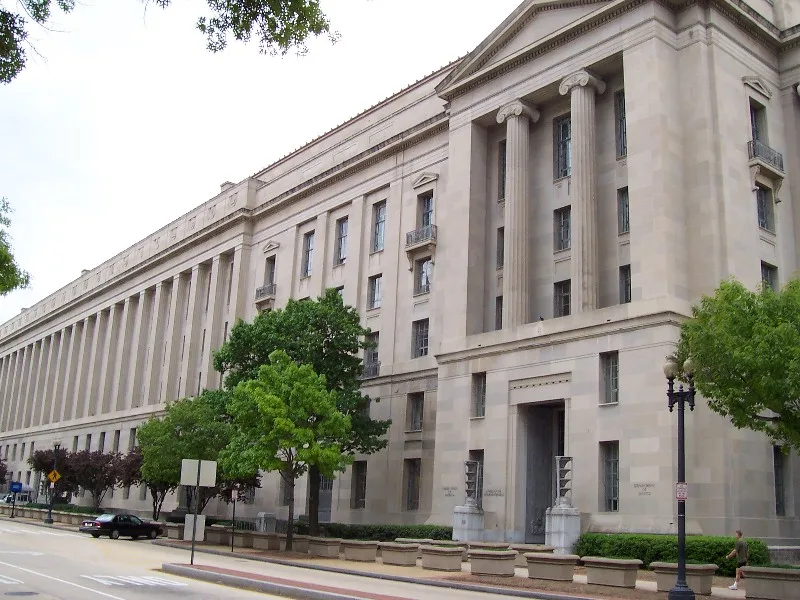



The Justice Department filed a civil forfeiture action November 23 seeking more than $1.1 billion in USDC linked to the October theft from cryptocurrency exchange Binance. The case seeks a legal transfer of assets already restrained after the hack, rather than announcing that another $1.1 billion has just been recovered.
What happened
The department’s announcement describes the action as part of efforts to recover more than $6 billion taken from Binance on or about October 29. Officials said U.S. authorities had helped freeze, seize or return more than $2.9 billion from multiple sources since the theft. Those categories include restricted assets, not only money already restored to the exchange.
The new case targets USDC, a dollar-pegged stablecoin issued by Circle Internet Financial. The Block calculated approximately $1.17 billion from balances in the complaint, covering 36 addresses across 18 blockchains. The Justice Department rounded the amount to more than $1.1 billion.
According to the 26-page complaint filed in federal court in Washington, Circle blocked access to the identified USDC addresses. Prosecutors say the United States cannot directly access the property because the addresses remain under the attackers’ control. Circle told investigators it cannot transfer the original tokens from those blocked addresses.
Instead, the complaint says Circle has agreed to issue an equivalent amount of new USDC and transfer it to the United States if the court enters a forfeiture order. That condition separates the proposed recovery mechanism from the access restrictions already in place. The filing requests forfeiture; it is not itself an order awarding the assets.
The FBI, Secret Service and IRS Criminal Investigation are investigating. In the complaint, the agencies assess that North Korean military hackers known as Lazarus Group or APT38 carried out the theft. That attribution is the government’s allegation in the civil case.
The complaint also sets out Binance’s account of how the intrusion began. The exchange told law enforcement that an employee contacted by a purported job recruiter downloaded software during an interview. Investigators allege that the software contained malware and that the compromised device enabled unauthorized access to Binance wallets.
Prosecutors describe the attackers moving assets between addresses and converting them across blockchain networks, which they say complicated tracing. The complaint seeks forfeiture on grounds tied to alleged computer intrusion, fraud and money laundering. Its requested relief includes requiring potential claimants to respond and obtaining a final order disposing of the property under law.
Separately, Cointelegraph reported that Binance obtained a $6.5 billion worldwide freezing injunction from the Abu Dhabi Global Market Courts on November 18. That order, the U.S. forfeiture request and the broader recovery totals describe different legal measures and overlapping assets; they are not separate cash recoveries to add together.
How outlets covered it
Reuters published a brief account centered on the civil claim: Washington was seeking more than $1 billion linked to the Binance theft, which U.S. authorities attributed to North Korean actors. Its report concentrated on the announcement rather than the mechanics of moving frozen tokens.
The Block focused on the court filings and Circle’s proposed replacement tokens. It distinguished the approximately $1.17 billion identified in the complaint from the earlier restraint announcement and explained that prosecutors separately sought to keep the assets restricted.
Cointelegraph placed the filing alongside ongoing tracing and Binance’s other recovery efforts. It highlighted Elliptic’s report that at least $247 million in bitcoin had moved through mixing services, as well as the exchange’s separate Abu Dhabi injunction.
All three reports described an effort to recover funds. The specialist publications supplied more detail about the tokens, legal restrictions and remaining tracing work than Reuters’ short dispatch.
What’s disputed
The court must still determine whether to grant the forfeiture the government requests. The complaint’s allegations about the attackers, the transactions and the connection to the theft remain allegations until resolved through the case. Circle’s proposed issuance of replacement USDC depends on a court forfeiture order.
The broader recovery also remains incomplete. The department’s combined total of frozen, seized or returned assets does not establish how much has already reached Binance, and it does not mean all stolen assets are within U.S. control. Further tracing, legal proceedings and transfers will determine how much can ultimately be recovered.
How this article was produced
This article was generated using AI from the sources linked below. It does not include firsthand reporting or interviews. Our editors monitor published articles and correct errors promptly. Claims attributed to outside sources have not been independently verified by this publication.
Found an error? Email corrections@thecivicbearing.com.
Sources
- U.S. Justice Department — United States Files Action to Recover More Than $1 Billion in Cryptocurrency Assets Stolen by North Korean Cyber Actors in Binance Hack (November 23, 2026)
- U.S. District Court, District of Columbia — Verified Complaint for Forfeiture In Rem, Case 1:26-cv-04150 (November 23, 2026)
- Reuters — US files action to recover over $1 billion in cryptocurrency stolen in Binance hack (November 23, 2026)
- The Block — DOJ seeks $1.17 billion in USDC tied to Binance hack; Circle could issue replacement tokens (November 23, 2026)
- Cointelegraph — DOJ Moves to Recover $1.1B From North Korea-Linked Binance Theft (November 23, 2026)