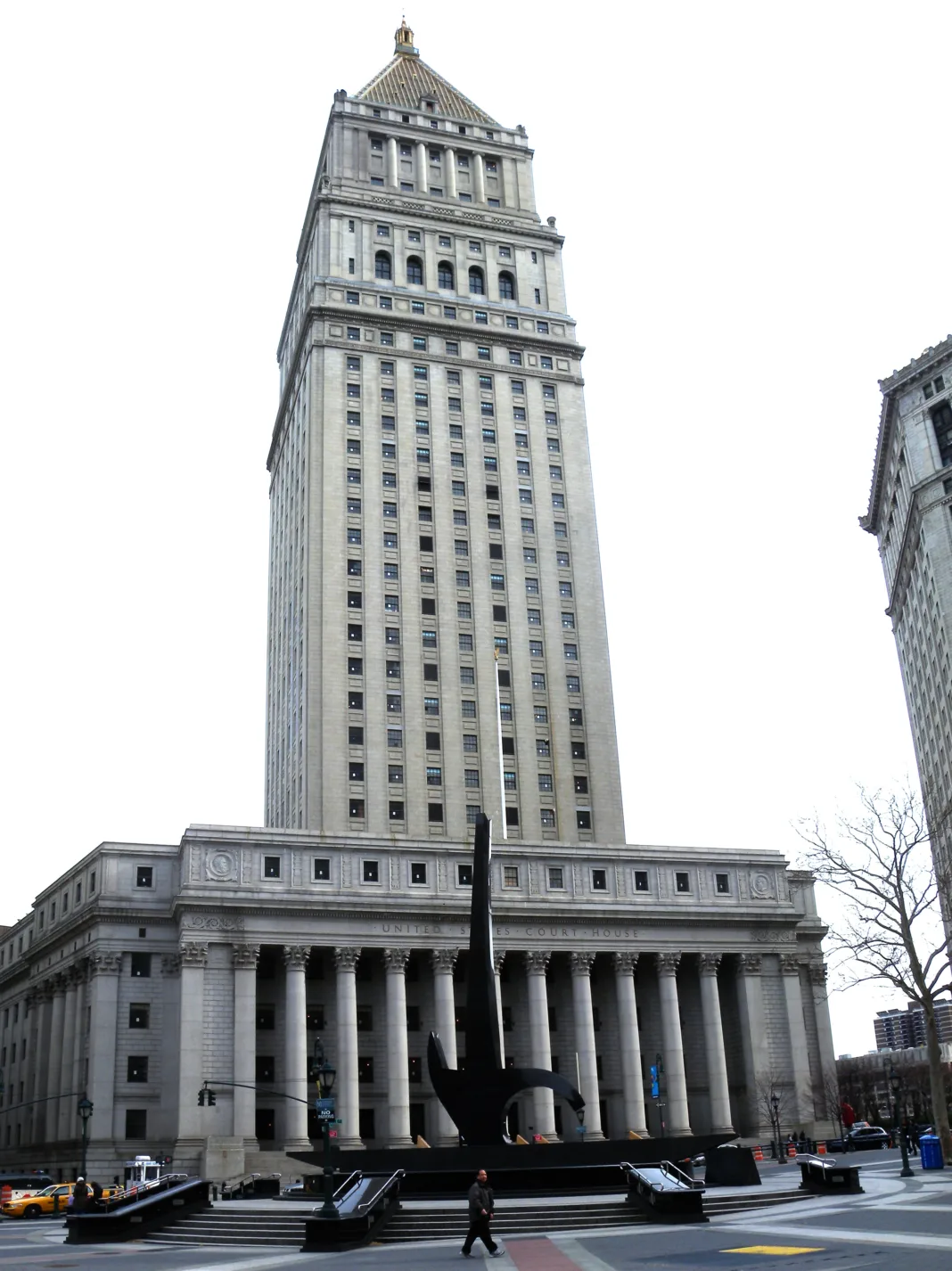



A federal appeals court on November 23 revived President Donald Trump’s effort to move his New York hush-money case into federal court, The Associated Press reported. The decision gives him another opportunity to pursue his immunity arguments; it does not erase his conviction.
What happened
The Second Circuit sent the question back to the federal district court after rejecting the earlier refusal to allow Trump’s renewed removal effort, according to The Independent’s written report. A further district-court decision is still needed on whether the case belongs in federal court.
A New York jury found Trump guilty of 34 counts on May 30, 2024, according to the district court’s account of the proceedings. He received an unconditional discharge on January 10, 2025. His lawyers have pursued both a state appeal and a separate effort to obtain a federal forum.
The two issues are different. Removal concerns which court can hear a case. Presidential immunity concerns which conduct may be prosecuted and what evidence may be used. Winning an opportunity to seek removal does not by itself resolve the immunity question or set aside the jury’s verdict.
The dispute follows the Supreme Court’s July 1, 2024, decision in Trump v. United States. That ruling recognized absolute criminal immunity for actions within a president’s exclusive constitutional authority, at least presumptive immunity for other official acts and no immunity for unofficial conduct.
The Supreme Court also restricted the use of protected official conduct as evidence in a prosecution. Its ruling arose from the separate federal case concerning the 2020 election, rather than the New York business-records prosecution. Applying its protections requires courts to distinguish official actions from private conduct.
In the New York litigation, Trump argued that evidence presented at trial implicated his official presidential activities. The August 28 district-court ruling rejected his renewed request, finding that he had not shown sufficient justification and diligence for seeking removal when he did. That decision also characterized the hush-money payments as private conduct outside presidential authority.
The procedural history matters because criminal removal ordinarily has a deadline. The district court’s ruling set out the federal statute’s requirement to file within 30 days of arraignment or before trial, whichever comes first, while recognizing that a court may permit a later filing for good cause. A second notice also faces limits concerning grounds available earlier.
Those timing rules and the underlying immunity defense have produced separate arguments. Trump’s position is that the Supreme Court’s decision supplied grounds for renewed federal consideration. The earlier district-court ruling took the view that he had waited while pursuing relief in state court instead of promptly seeking removal.
How outlets covered it
The Associated Press framed the ruling as a new path for Trump to challenge his conviction, emphasizing the remaining district-court decision and the possibility of a later immunity claim.
The Independent described the decision as a procedural victory after repeated unsuccessful removal efforts. It placed more emphasis on the underlying payments and Trump’s attempt to obtain a different forum, while explaining that the question returns to the district court.
Both reports described a renewed legal opportunity rather than a decision vacating the verdict.
What’s disputed
The unresolved questions are whether the case should remain in federal court and whether the immunity arguments justify relief from the conviction. Trump’s lawyers maintain that official-acts protections apply to evidence used against him. The prior district-court ruling rejected his removal arguments; Monday’s appellate action reopens that procedural route without settling the ultimate result.
Opinion: The Civic Bearing’s Take
This section is opinion and reflects The Civic Bearing’s conservative perspective.
A president should be able to obtain a careful hearing on constitutional protections, including when a politically charged prosecution raises questions about official conduct. Courts should decide those protections through legal reasoning, rather than treating the identity of the defendant as an answer.
The distinction between a procedural victory and exoneration deserves equal respect. Conservatives can support a fair federal hearing without claiming that a conviction has disappeared. The sound outcome is a clear decision explaining which conduct was official, which was private and what consequences follow under the Supreme Court’s rule.
How this article was produced
This article was generated using AI from the sources linked below. It does not include firsthand reporting or interviews. Our editors monitor published articles and correct errors promptly. Claims attributed to outside sources have not been independently verified by this publication.
Found an error? Email corrections@thecivicbearing.com.
Sources
- Associated Press — Federal appeals court gives President Donald Trump a path to erasing hush money conviction (November 23, 2026)
- The Independent, via AOL — Appeals court gives Trump a win with new path to toss his hush-money convictions (November 23, 2026)
- U.S. District Court, Southern District of New York — People of the State of New York v. Trump, Document 93 (August 28, 2026)
- U.S. Supreme Court — Trump v. United States (July 1, 2024)