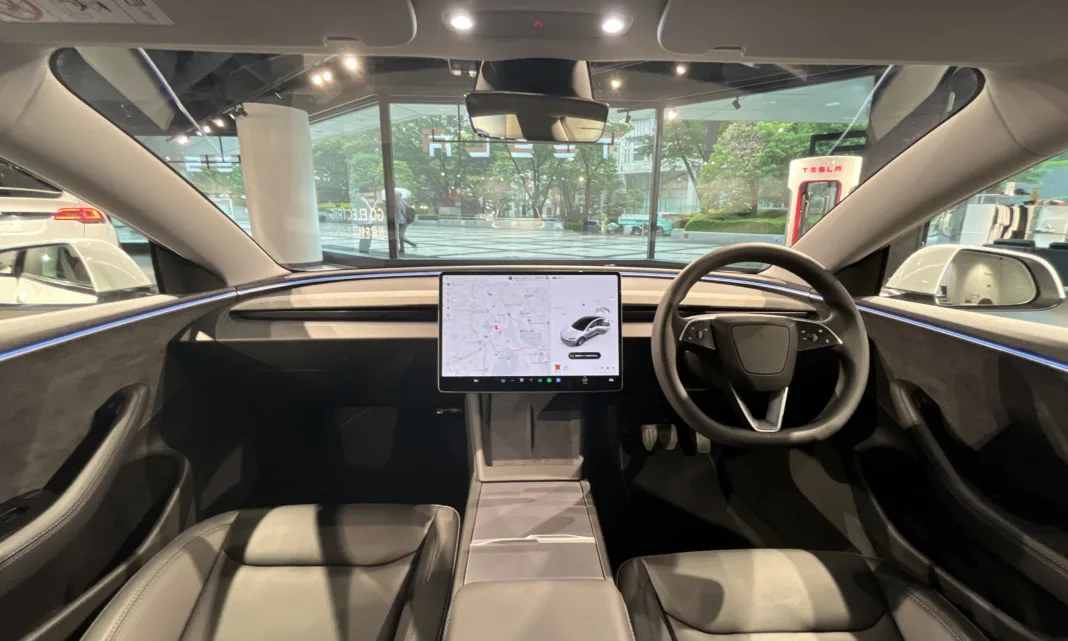



New York has enacted restrictions on recurring charges for certain car features already built into a vehicle, including heated seats that work without continuing support. Governor Kathy Hochul signed the measure November 23, but its published text leaves broad exemptions for connected services, entertainment and software-dependent driving systems.
What happened
The legislative record identifies the measure as Chapter 414 of the Laws of 2026. It adds a vehicle-feature subscription provision to the General Business Law, covering manufacturers, dealers and their agents when they offer subscriptions to people who buy or lease vehicles for use rather than resale.
The prohibition has two conditions. First, the feature must use components and hardware installed when the consumer purchases or leases the vehicle. Second, once activated, it must function without continuing costs or support from the manufacturer, dealer or a third-party service provider. Both conditions must apply for the subscription restriction to take effect.
That distinction makes heated seats a central example in the legislation. The law’s definition of a vehicle feature covers convenience and safety functions typically offered as upgrades, and specifically mentions heated seats. The test concerns how a feature operates after activation, rather than merely whether the vehicle has the necessary equipment inside it.
The subscription definition covers recurring weekly, monthly or annual payments. It expressly excludes installment payments used to buy a vehicle and payments under a vehicle lease. The new provision therefore does not treat an ordinary car loan or lease bill as a prohibited feature subscription.
Several familiar services are outside the restriction. The text exempts navigation updates, infotainment, satellite radio, in-vehicle Wi-Fi, telematics and roadside assistance. It also excludes software-dependent driver-assistance or driving-automation features, along with connected services that need cellular or other data networks to keep operating. Installed hardware alone does not bring those named services within the ban.
Manufacturers and dealers can continue supplying software updates. The provision separately says they cannot charge for a software update fixing a safety-related defect when federal law requires that update to be provided without charge. Its subscription restrictions do not replace that existing obligation to supply qualifying safety fixes at no cost.
Violations carry a civil penalty of up to $250 per point of sale for each violation. The New York Department of State is authorized to issue rules needed to implement and enforce the law. The text also permits preparatory rulemaking before the main provisions become effective.
In a November 23 announcement distributed by Public Technologies, Hochul’s office presented the law as a cost-of-living measure against extra charges for built-in equipment for New York consumers. Senator James Skoufis and Assemblymember William Magnarelli sponsored the legislation. The announcement cited heated seats and remote start among the features officials wanted consumers to use without additional monthly bills.
How outlets covered it
Car and Driver led with the end of subscriptions for installed hardware, using heated seats and remote start to explain the consumer benefit. It also questioned how hands-free driving packages would be treated and said it had asked the governor’s office for clarification.
Ars Technica put more emphasis on the ongoing-cost exception. Its account argued that navigation and driving systems need continuing updates, leaving room for automakers to retain many subscriptions despite the heated-seat headline.
Subscription Insider organized its coverage around compliance, separating prohibited subscriptions from exempt services and explaining the penalty and state rulemaking authority.
All three described a narrower measure than a ban on every recurring car charge. Car and Driver emphasized everyday examples, Ars focused on the restriction’s limits, and Subscription Insider mapped the categories businesses must distinguish.
What’s disputed
The effective-date statements do not align. The published bill says the act takes effect on the 90th day after becoming law. Hochul’s November 23 announcement gives February 27, 2027, while also describing that date as 90 days away. Counting 90 days after November 23 produces February 21. The announcement does not explain the difference.
The treatment of particular products also depends on the statutory exemptions and the continuing-support test. Although the governor’s announcement mentioned hands-free driving and enhanced navigation, the text explicitly excludes software-dependent driving features and navigation updates. It does not name individual commercial packages; implementation rules can clarify how officials will apply the restrictions.
How this article was produced
This article was generated using AI from the sources linked below. It does not include firsthand reporting or interviews. Our editors monitor published articles and correct errors promptly. Claims attributed to outside sources have not been independently verified by this publication.
Found an error? Email corrections@thecivicbearing.com.
Sources
- New York Legislature — A10411A, vehicle feature subscriptions (2026 session; signed November 23, 2026)
- New York Senate — S9348A legislative history (November 23, 2026 action)
- Governor Kathy Hochul, via Public Technologies — Money in Your Pockets: Governor Hochul Signs Bill Restricting Exploitative Vehicle Subscription Fees (November 23, 2026)
- Car and Driver — New York Bans Post-Purchase Subscriptions on Vehicles (November 24, 2026)
- Ars Technica — No more heated seat subscriptions for cars in New York from 2027 (November 24, 2026)
- Subscription Insider — New York Limits What Automakers Can Sell as Subscriptions (November 24, 2026)