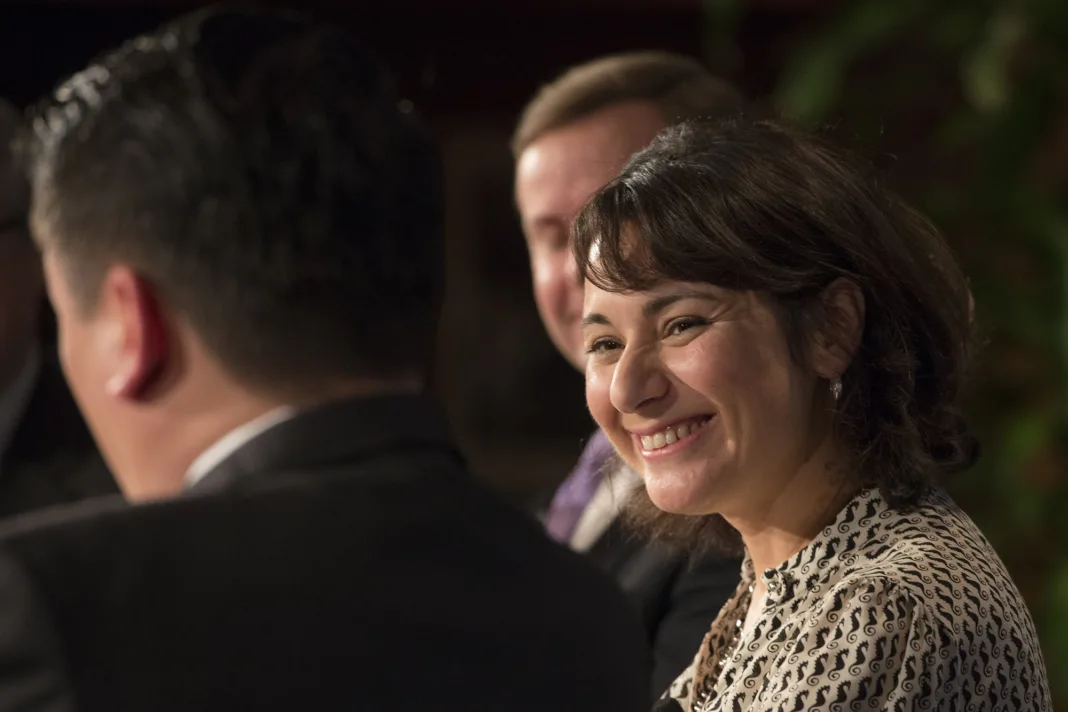



President Donald Trump said November 20 that he expected to work with Texas Governor-elect Gina Hinojosa on border security after a telephone conversation he described as productive. His comments followed Hinojosa’s meeting with 16 border sheriffs and her public support for cooperation with Washington, even as she outlined changes to Texas immigration policies.
What happened
Speaking at a White House news conference, Trump said Hinojosa wanted a strong border and expressed confidence they could reach an understanding, according to ABC13’s written report. Neither his remarks nor Hinojosa’s account announced a completed agreement on funding, enforcement or border infrastructure.
Hinojosa’s November 19 statement said she and state Representative Richard Peña Raymond met with all 16 sheriffs from Texas border communities, including Republicans and Democrats. The discussion covered local conditions, enforcement strategies, continuing funding and coordination. Raymond convened the meeting at her request. Her statement presented the gathering as a chance to hear directly from border communities.
The statement included supportive comments from Terrell County Sheriff Thad Cleveland and Hidalgo County Sheriff Eddie Guerra. Cleveland emphasized her willingness to listen to border law enforcement; Guerra welcomed her commitment to supporting their work. Sheriffs listed as attending included officials from El Paso, Hudspeth, Webb, Cameron and Brewster counties.
Hinojosa said in the statement that she intended to maintain border security and warned against cartel misinformation aimed at vulnerable people. Her pledge to support sheriffs addressed cooperation with local law enforcement, while her separate comments on federal immigration enforcement raised questions about how that partnership would operate.
In a November 18 interview with The Texas Tribune, Hinojosa said she had raised concerns about a physical wall near Big Bend National Park and described electronic monitoring as a preferred alternative there. She also said she would reverse Abbott’s directive to identify public land for migrant detention.
Trump placed the Texas conversation within a broader discussion of working with Democrats. Reuters reported that he also threatened to veto legislation he opposed after Democrats take control of Congress in 2027, while presenting negotiations on healthcare and immigration as possible areas of agreement.
How outlets covered it
Just the News led with Trump’s expectation of cooperation. Ben Whedon’s brief paired that positive assessment with Hinojosa’s criticism of federal immigration enforcement and the possibility of less state cooperation with Immigration and Customs Enforcement than under Abbott. Its emphasis was the tension between a shared border-security goal and differences over enforcement.
The Texas Tribune approached the story through a broad interview about Hinojosa’s governing plans. Kayla Guo’s account included her explanation of regional differences in border-security needs and her intended changes to Abbott’s orders. The interview gave more space to her policy preferences than to Trump’s assessment of their relationship.
ABC13 focused on Trump’s confirmation of the call and his favorable description of Hinojosa. Its short report also noted her strong-border platform and the bipartisan sheriff roundtable. It did not lay out a detailed joint policy proposal.
Reuters covered the call near the end of a wider report on Trump’s veto warnings. Its main subject was how the president might bargain with an incoming Democratic Congress. The Hinojosa exchange served as an example of possible cooperation across party lines rather than the report’s central policy story.
The chief difference was emphasis: Just the News highlighted potential enforcement friction, the Tribune explored Hinojosa’s agenda, ABC13 reported the favorable exchange and Reuters placed it within national bargaining.
What’s disputed
The timing is unclear: Trump described a call two days earlier; the Tribune reported a Saturday conversation. Neither account identifies whether there were separate calls.
The Tribune reported no commitment from Trump on Hinojosa’s Big Bend request. The choice between physical barriers and electronic monitoring remains unresolved.
Opinion: The Civic Bearing’s Take
This section is opinion and reflects The Civic Bearing’s conservative perspective.
Border security deserves practical cooperation between Washington, Austin and county sheriffs. The willingness to talk is welcome. The next step should be a clear account of responsibilities, resources and expected results, so that a cordial conversation produces something Texans can evaluate.
Hinojosa’s emphasis on local needs should be tested against the same standard as Trump’s enforcement agenda: whether the measures protect communities and uphold the law. Neither party should treat consultation with sheriffs as a substitute for explaining its decisions. Cooperation can accommodate disagreement, but it needs specific commitments and public accountability.
How this article was produced
This article was generated using AI from the sources linked below. It does not include firsthand reporting or interviews. Our editors monitor published articles and correct errors promptly. Claims attributed to outside sources have not been independently verified by this publication.
Found an error? Email corrections@thecivicbearing.com.
Sources
- Gina Hinojosa — Governor-Elect Gina Hinojosa Convenes Every Border Sheriff for Bipartisan Meeting On Public Safety (November 19, 2026)
- The Texas Tribune — Gov.-elect Gina Hinojosa says she talked border with Trump, will roll back Abbott executive orders on H-1B visas, THC (November 18, 2026)
- Just the News — Trump had ‘productive call’ with Texas gov-elect, expects cooperation on border (November 20, 2026)
- ABC13 — Trump has ‘productive’ phone call with Texas governor-elect Gina Hinojosa, president says (November 20, 2026)
- Reuters, via WTAQ — Trump says Democrats facing veto power should work with him (November 20, 2026)